Blog

PART 4: Russell Kirk in Syria: Further considering what it means to be a conservative

by Kyle Scott, The Conservative Professor

Part 4: Russell Kirk in Syria: Further Considering What It Means to Be a Conservative

From Dr. Scott’s blog

20130830-211758.jpgA statesman ought to be prudent as prudence is the fourth conservative principle provided by Russell Kirk. This is an area in which Edmund Burke and Plato agree as well; both place prudence as the first among the equal virtues to be possessed by a statesman. Prudence is simply the recognition of the complexity of problems and the need to take a measured assessment before acting. This principle may seem foreign to our world of instant everything, but it is a virtue worth reclaiming.

Kirk comments that, “[s]udden and slashing reforms are as perilous as sudden and slashing surgery.” It is oftentimes impossible, and almost always difficult, to roll back the effect of an imprudent action whether it be committing troops to war or creating a new bureaucratic apparatus. But consequentialist reasoning is by no means a sufficient basis on which to build philosophy. And Kirk does not rest his argument on consequentialist grounds. Kirk posits that human society is complex and the human mind’s capacity is limited. Thus, the human capacity to resolve all issues sufficiently well is improbable and doing so quickly is impossible. Kirk’s endorsement of prudence is grounded in the reality of the human condition.

Progressives want change immediately as they feel that progress comes from within the human rather than in a commitment to a thing greater than self. Progressives put faith in man. Once man is given the capacity, as progressives proclaim they have, to control his environment for the better there are no restraints on his actions. This is what Nietzsche meant when he wrote, “God is dead.” Within Enlightenment philosophy individuals were given full agency which meant they had to defer to no higher authority beyond their own will. Progressives are committed to the human mind and the products thereof without recognizing the limits we as people have. Prudence recognizes natural limits and asks us to act accordingly. Prudence runs contrary to the principles of the Enlightenment.

As we look to the situation in Syria we can apply what Kirk puts before us. First, there is no immediate threat to the U.S., its citizens, or its allies if we do not intervene in the Syrian civil war. Second, there is plenty in the historical record to show that limited military engagements are rarely successful at accomplishing their goal and rarely remain limited once they are begun. The use of chemical weapons against innocent civilians is appalling and we are all moved by the images, but we should be prudent and not allow emotions to take over our judgment. Obama must plead his case before Congress and the American people before moving forward with military action given the amount of lives and treasure that could be lost with an involvement in Syria. Once we have committed ourselves, it could take years to settle the matter if not longer.

Furthermore, we must meet with the Israelis and give them time to consider the options given that any retaliation by the Syrian government not directed at its own people will be directed at our closest ally in the region, and maybe even the world. There is no need to be hasty in this situation. There is no urgency for American involvement given that there is no American interest under direct threat. We can take time to deliberate and thus act prudently.

To say that we can predict the outcome of our potential involvement is an act of hubris. To take action in Syria is to assume the Syrian people, and the world in general, will be better off if the U.S. involves itself in the civil war. There is no way to know the answer to this question but committing troops is a commitment to the idea that we do know the answer. We owe it to our citizens, our troops and our allies to act prudently in this and all other scenarios. It is what a conservative would do.

PART 2: What we need for victory in 2014 and beyond

PART 2: What We NEED FOR victory in 2014 and Beyond

by Kyle Scott

From Dr. Scott’s blog.

Since 2012 there has been soul searching among Republicans about what went wrong and how we can win back the Senate and the White House as well as win local elections. What has been lacking is a serious discussion about what it means to be a conservative and thus what the Republican Party ought to stand for. No political strategy will be successful if we don’t have a solidified sense of self. If Republicans are to expand our sphere of influence, we must first decide what it is they mean by conservatism. It is not enough to talk about protecting the border, cutting taxes, and defunding Obamacare. Republicans must possess a core set of values and know why those values are conservative. Enough of the clichés!
On the national level Rand Paul and Chris Christie are exchanging barbs, and each has a different vision for the Republican Party and country. They also have different ideas of what it means to be a conservative. Republicans at all levels disagree among themselves about certain issues, such as whether Edward Snowden is a traitor or patriot. These disputes occur because there is not a clear, accepted definition of conservatism.

The effect of this lack of definition has deleterious effects on our governing as well since it frees up Republicans to act contrary to conservatism. Simply look at the grades given out by Texans for Fiscal Responsibility, and one will see that many Republicans serving in the Texas legislature are not beholden to principles of fiscal conservatism. Republicans in the House like Patricia Harless, Debbie Riddle, and Dan Huberty received failing grades, which indicates they voted against fiscal responsibility on a consistent basis. This is what happens when voters and representatives lack a sophisticated core—representatives can be easily pushed in the direction of big spending and away from conservative values. In order to demonstrate leadership and resist the temptation to go with the flow, an individual must know what he stands for and why.

There are innumerable definitions of conservatism and treatises on the topic. But a good place to start a sophisticated discussion of conservatism is Russell Kirk’s Ten Conservative Principles. They are as follows:

  1. conservatives believe in an enduring moral order,
  2. conservatives adhere to custom, convention, and continuity,
  3. we believe in what may be called the principle of prescription—that is, of things established through immemorial usage,
  4. we are guided by principles of prudence,
  5. conservatives pay attention to the principle of variety,
  6. we are chastened by our principle of imperfectability,
  7. conservatives believe that freedom and property are closely linked
  8. we uphold voluntary community and oppose involuntary collectivism,
  9. the conservative perceives the need for prudent restraints upon power and upon human passions,
  10. the thinking conservative understands that permanence and change must be recognized and reconciled in a vigorous society.

Over the next several posts, I will explore each of these principles and relate them to contemporary concerns while grounding them in a sophisticated exploration of what it means to be a conservative. I have taken up this task before in an earlier post and in a different context, but I think it is worthwhile to pursue the idea in more detail. Without a clear understanding of conservatism, there can be no Republican Party. Without a clear understanding of conservatism there won’t be a Republican Party worth having. We must understand who we are, what we stand for and why in order to win in the political arena and to make that victory matter. We must not be hasty but we must move swiftly.

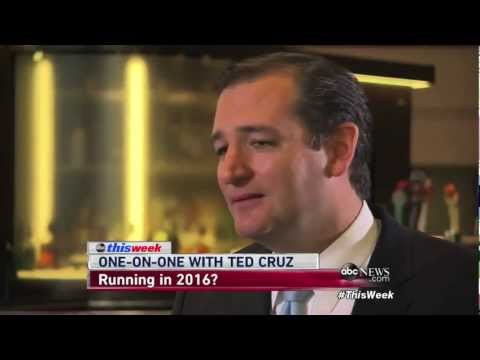
VIDEO: Sen. Ted Cruz with Jonathon Karl on “This Week.”

I’m excited about Sen. Cruz coming to KWTP on Aug. 19, are you? In the meantime, here’s Sen. Cruz with Jonathon Karl on “This Week.”

Sen. Ted Cruz with Jonathan Karl on 'This Week'
Watch this video on YouTube.

With Republicans Like These, Who Needs Democrats?

20130720-135445.jpg By Kyle Scott

Since the 2012 election, there has been quite a lot of talk about Harris County moving from Republican to Democrat. But anyone who is paying attention to this legislative session will see that the Republican legislators from Harris County are not particularly conservative on budgetary matters anyway. There has been a 26% increase in this budget over the previous budget. Rather than banking additional tax revenue this legislature has decided to spend more and then take $4 billion out of the rainy day fund.

With the passage of a budget that allowed for a raid on the ‘rainy day fund’, for an encore Harris County-based Representatives Dan Huberty, Patricia Harless, and Debbie Riddle joined with Democrats to support HB 16 and HJR 2 thus allowing for the rainy day fund to be raided with impunity. The Senate passed a bill that included a baseline under which the rainy day fund would not drop—a poor consolation for raiding the fund in the first place but a consolation nonetheless. When that bill came before the House the baseline was removed. Now, thanks to a coalition of irresponsible spenders, the rainy day fund can be raided with impunity.

The irresponsible budgeting of the Texas legislature during this legislative session has even garnered national attention with the Wall Street Journal comparing Austin to Sacramento. Texas is experiencing a boom—thanks to oil—in the same way California had experienced a boom—thanks to real estate—when it had decided to increase spending in the face of a positive financial outlook. Texas legislatures have failed to learn from California in recognizing that good times come to an end and a budgetary surplus can come in handy down the road. When one asks the government “How much can you spend?” the government usually replies, “How much do you have?” and then it takes some more.

Even a casual observer of politics and economics knows that saving money in good times is generally a good idea and that spending like the good times will go on forever will wreak havoc on a budget in the long run. The Texas legislature would do well to make two adjustments to the budgetary process in order to prevent these mistakes. First, we need a zero-based budgeting approach for all state agencies. Zero-based budgeting would allow legislators to assess how much money is really needed by an agency and not just how much money an agency usually gets. Second, discretionary spending should be handled after mandated spending and matters such as transportation and water are dealt with. Right now legislators are trying to say they need to raid the rainy day fund for roads and water. And they are right, we need to fund road and water projects. But these projects should have been dealt with first, not last, and discretionary spending measures should have been moved to the back of the line. By moving the most important matters to the back of the line legislators manipulated the situation to make it appear as though there is more of a scarcity of resources than there actually is. While money is the most important thing in making budget decisions, timing comes a close second.

We should all be alarmed by the dangerous and irresponsible budget practices by this legislature. What should be particularly alarming is that the conservatives are not acting like conservatives which means the spending will only increase and raiding the rainy day fund will only continue.

– See at: Dr. Scott’s Blog. .

Welcome to Behind the Scenes in East Montgomery County

Things are beginning to happen up in East Montgomery County. It can mean better opportunities for everyone in the area or it could be an unmitigated disaster. Join Bryce Howe in getting the right people in the right places in our community to carefully plan our coming growth in a productive way for everyone.

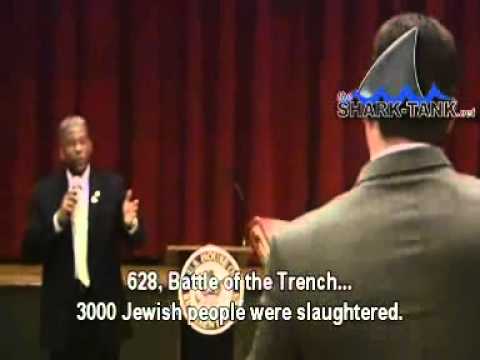
VIDEO: CAIR Confronts Allen West & Gets Schooled by Him

CAIR Confronts Allen West (with subtitles)
Watch this video on YouTube.

This Photo Too Controversial?

20130705-141436.jpg

Only in an evil world…

PHOTOs: By Bob Price of KWTP in Yesterday’s 4th of July Parade (2013)

View Slideshow of Bob Price’s great pictures!

DOMA Bad, Traditional Marriage Good from Michael Walsh, PJTV

MUST WATCH:

Michael Walsh tells it like it is: Equal Protection under the law renders all cronyism of business or special interest groups and the government unconstitutional, infringing on other’s rights. Well Done!

PJTV: DOMA Bad, Traditional Marriage Good
Watch this video on YouTube.

Thomas Sowell: Immigration Common Sense

20130702-082855.jpg

Thomas Sowell, Immigration Gambles

We are importing many foreigners who stay foreign, if not hostile. Blithely turning them into citizens by fiat, rather than because they have committed to the American way of life, is an irreversible decision that can easily turn out to be a dangerous gamble with the future of the whole society.

What happened in Boston shows just one of those dangers.

Thomas Sowell, Immigration Gambles:Part II

Waiting until the border has already been secured before an immigration policy is decided upon would also allow time to discuss the pros and cons of various ways of enforcing whatever that policy might turn out to be. But many politicians much prefer to rush complex legislation through Congress before the public knows what is in it or what is at stake. “We the people” are to be by-passed.

Time to deliberate would also be time to raise questions as to why local government officials in “sanctuary” cities who openly thwart or defy federal immigration laws should be allowed to get away with such illegal acts, while private employers are forced to become enforcers of such laws, under heavy penalties for not investigating the legal status of those they hire.

Government officials at all levels take an oath to uphold the laws, but somebody who owns a restaurant or hardware store has not applied for the job of border enforcement — and the 13th Amendment forbids involuntary servitude. Or are we already too far along on the road to serfdom for that to matter any more?